
What the Data Doesn't Tell You About Montpellier
What Montpellier actually looks like behind the relocation data: the heat, the free transit, the Étangs, and the trade-offs to plan for before you move.
Tia
6/7/20263 min read
A City Built Around the Heat
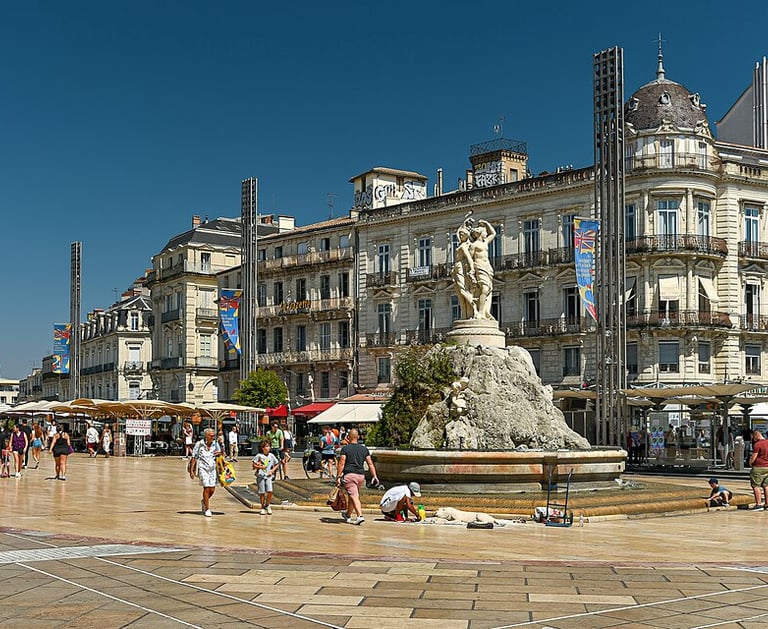
Most Montpellier coverage gives you the temperature charts and moves on. The reality is more specific. The city averages summer highs of 86°F to 91°F or 30°C to 33°C, with heat waves regularly past 104°F or 40°C! What that looks like in practice is that most residential buildings still do not have air conditioning, and renovations are slow because the historic stone stock was not built for it. Locals adapt the rhythm of the day around the temperature, with errands and exercise shifting to early morning, lunches stretching longer, and shutters staying closed from late morning through mid-afternoon. For anyone arriving from a northern American city, this is the single biggest lifestyle adjustment to plan for.
What Free Transit Actually Changed
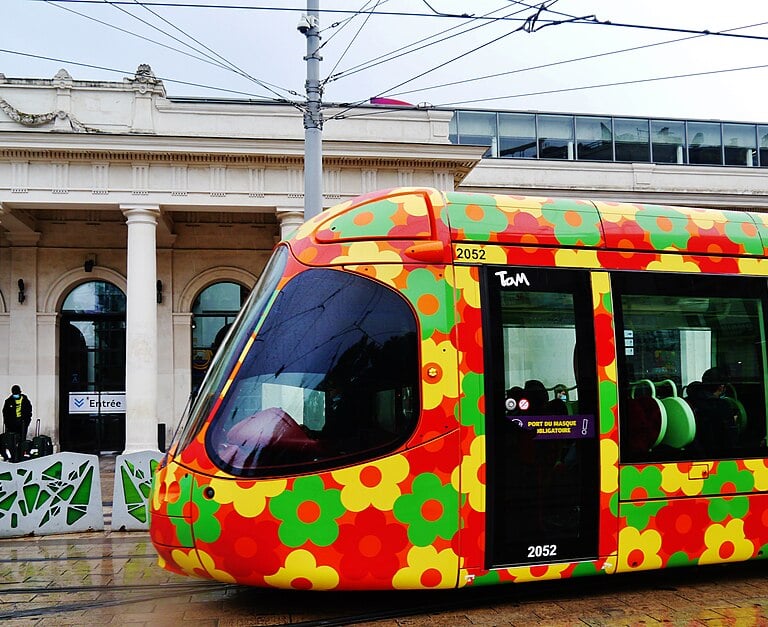
In December 2023, Montpellier became one of the largest cities in Europe to make public transit free for residents. Trams and buses cost nothing, with a simple registration through the TAM app. Interestingly, reports from residents describe a noticeable drop in private car use in the center, more spontaneous off-peak ridership, and a shift in how people structure errands. Younger residents and students adopted it immediately, and older residents took longer but came around. The city has also leaned hard into bicycle infrastructure to match, with the 235-kilometer Vélolignes network designed to keep cyclists separated from traffic. If you arrive expecting to need a car, Montpellier is one of the few French cities that will challenge that assumption from week one. But for outer city travel, a car will be convenient. Watch the full video if you don't want to buy a car!
The Étangs and Montpellier's Quiet Edge
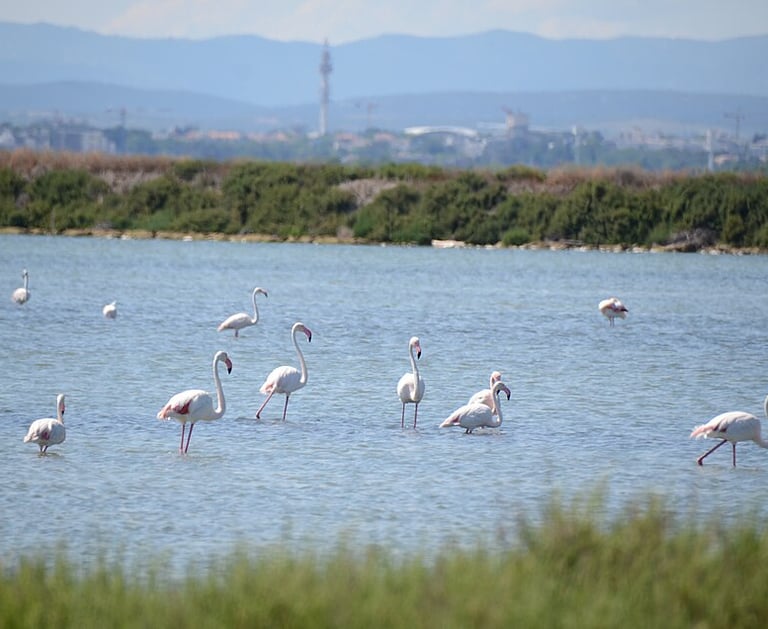
The Étangs deserve a longer look than the data usually gives them, because they do not appear in the standard south-of-France travel itineraries built around Nice or Cannes. They are the chain of coastal lagoons that stretch between Maguelone and Sète, about 20 minutes from the city. The water is shallow and warm. The wild flamingos that gather in the marshes live there year round. Maguelone Cathedral sits on what is effectively a small island, reachable by a long causeway that used to be a tidal crossing. The seafood here, especially the oysters from Bouzigues, comes off the lagoons themselves and arrives at restaurant tables within hours. This stretch of coast is one of the more unexpected discoveries in the region, and it is sitting right outside the city.

What This Adds Up To
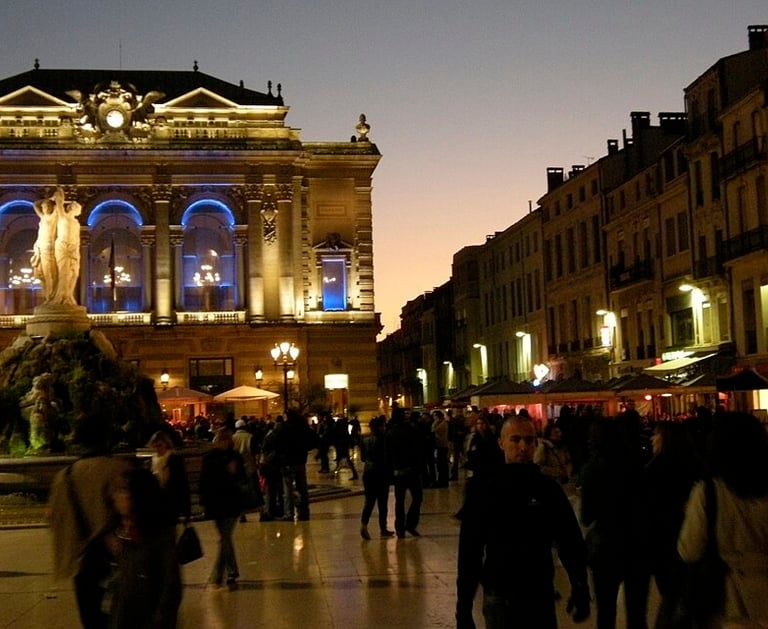
Montpellier is on many a shortlist for a reason. The free transit, the Mediterranean light, the medical heritage, the food, and the flamingoes add up to a city that quietly outperforms its reputation. While the summer heat, the housing pressure, the thin local job market are the trade-offs that come with it. If you can bring your own income, pick your neighborhood carefully, and plan ahead for the summer heat before you sign anything you will be signing up for living in paradise. No one city is perfect, but Montpellier has many facets that truly deliver.
Watch the full video here and stay tuned for the conclusion to the series next Saturday at 10am EST!
Image Credits:
https://commons.wikimedia.org/wiki/File:Montpellier-_Place_de_la_Com%C3%A9die_-_52282886625.jpg

Jorge Franganillo, CC BY 2.0 <https://creativecommons.org/licenses/by/2.0>, via Wikimedia Commons
https://commons.wikimedia.org/wiki/File:Montpellier_Tram_06.jpg

Zairon, CC BY-SA 4.0 <https://creativecommons.org/licenses/by-sa/4.0>, via Wikimedia Commons

Henk Monster, CC BY 3.0 <https://creativecommons.org/licenses/by/3.0>, via Wikimedia Commons
https://commons.wikimedia.org/wiki/File:Montpellier_-_Place_de_la_Com%C3%A9die_-_Nuit_2008-11-15.jpg

Alexander Baranov from Montpellier, France, CC BY 2.0 <https://creativecommons.org/licenses/by/2.0>, via Wikimedia Commons
https://commons.wikimedia.org/wiki/File:Montpellier_fg03.jpg

Fritz Geller-Grimm, CC BY-SA 2.5 <https://creativecommons.org/licenses/by-sa/2.5>, via Wikimedia Commons
Contact
Get in touch
info@storybooklivingfrance.com
© 2025. All rights reserved.
Merci!
Some links in this description are affiliate links. I may earn a small commission if you book/purchase through them at no extra cost to you.


